skip to main content

MUSEUM

USGA Golf Museum & Library’s Top 10 Acquisitions of 2025

By Elizabeth Beeck, USGA

| Dec 22, 2025 | Liberty Corner, N.J.

The ball used by Harry Vardon to win the 1900 U.S. Open is now among the USGA Museum's collection. (USGA/Darren Carroll)

In 2025, artifacts added to the USGA Golf Museum & Library vast collection originated from three different centuries and included everything from iconic artwork to items used by USGA champions. These additions help to tell new and interesting stories that celebrate the history of the game. Here are our top 10 from this year:

Ball used by Harry Vardon, 1900 U.S. Open

The six-time British Open champion, Harry Vardon won his only U.S. Open in 1900 at Chicago Golf Club, in Wheaton, Ill., in front what was then the largest gallery in American golf. A.G. Spalding enlisted Vardon to endorse its new golf line and invited him to tour the U.S. in 1900. While on this tour, he won 73 of the 88 matches he played.

Spalding worked with Vardon to develop the “Vardon Flyer” golf ball made from gutta-percha, a rubber-like substance, as its core. The Vardon Flyer seen here was used by Vardon when he won the 1900 U.S. Open and is currently on display in his locker at the World Golf Hall of Fame, in Pinehurst, N.C.  It is now the earliest championship-used ball in the Museum’s collection. This acquisition was made possible with funds provided by Don M. Wilson, III.
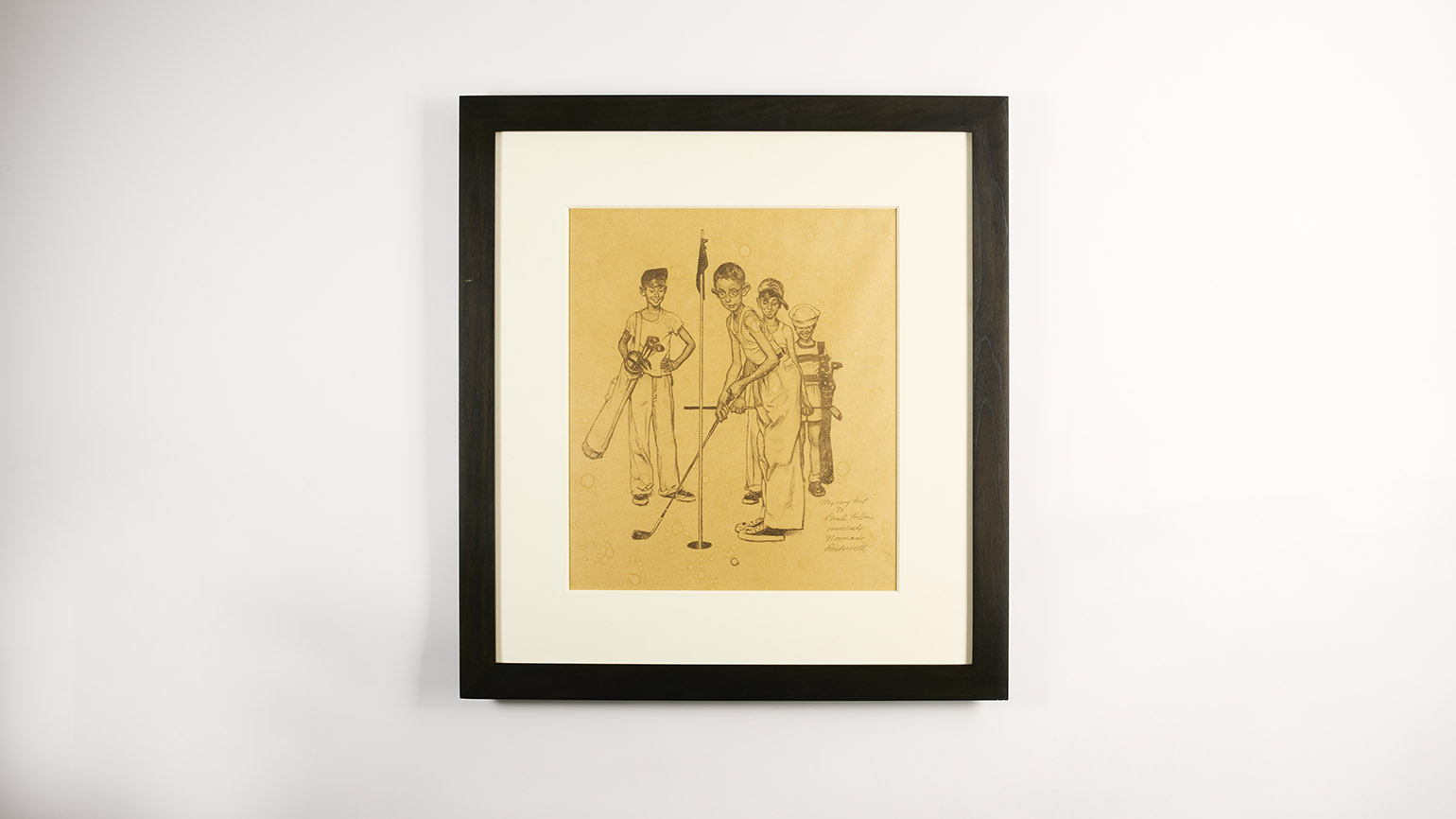
The Four Sporting Boys: Golf - Study by Norman Rockwell drawing was donated to the USGA Museum in 2025.  (USGA/Jonathan Kolbe)

The Four Sporting Boys: Golf - Study by Norman Rockwell drawing was donated to the USGA Museum in 2025. (USGA/Jonathan Kolbe)

“Missed (Four Sporting Boys: Golf)” by Norman Rockwell

Norman Rockwell’s artwork has become synonymous with idyllic mid-20th century American life. His work, “The Four Freedoms,” caught nationwide attention in 1943 when he brought to life President Franklin D. Roosevelt’s speech on the same topic.

In 1950, Rockwell launched a new series, "The Four Seasons,” which appeared in the form of a calendar created by Brown & Bigelow. Rockwell continued to illustrate the calendar over the next 16 years. The 1951 Summer issue featured “Missed (Four Sporting Boys: Golf),” where three boys watch as the fourth missed a putt. The print here is a pencil study done for the calendar.

J.J. Spaun used this ball to roll in his remarkable 65-foot birdie putt on the 72nd hole to close out the 2025 U.S. Open at Oakmont Country Club. (USGA/Jonathan Kolbe)

J.J. Spaun used this ball to roll in his remarkable 65-foot birdie putt on the 72nd hole to close out the 2025 U.S. Open at Oakmont Country Club. (USGA/Jonathan Kolbe)

Ball used by J.J. Spaun, 2025 U.S. Open

J.J. Spaun was the only competitor to finish under par over 72 holes in the 2025 U.S. Open at Oakmont (Pa.) C.C. Heavy rain created challenging conditions throughout Sunday’s final round. Spaun bogeyed five of his first six holes to fall five strokes off the lead, but a 96-minute weather delay gave him the opportunity to reset. He fought back to share the lead with two holes to play, then drove the 314-yard, par-4 17th, setting up a two-putt birdie to pull ahead.

On the 18th, Spaun faced a 65-foot birdie putt, needing to get down in two to seal his first major championship victory. Instead of lagging it, Spaun poured the putt in, unleashing an emotional celebration after watching it disappear into the hole.

Spaun donated his driver and the ball from his historic final putt.

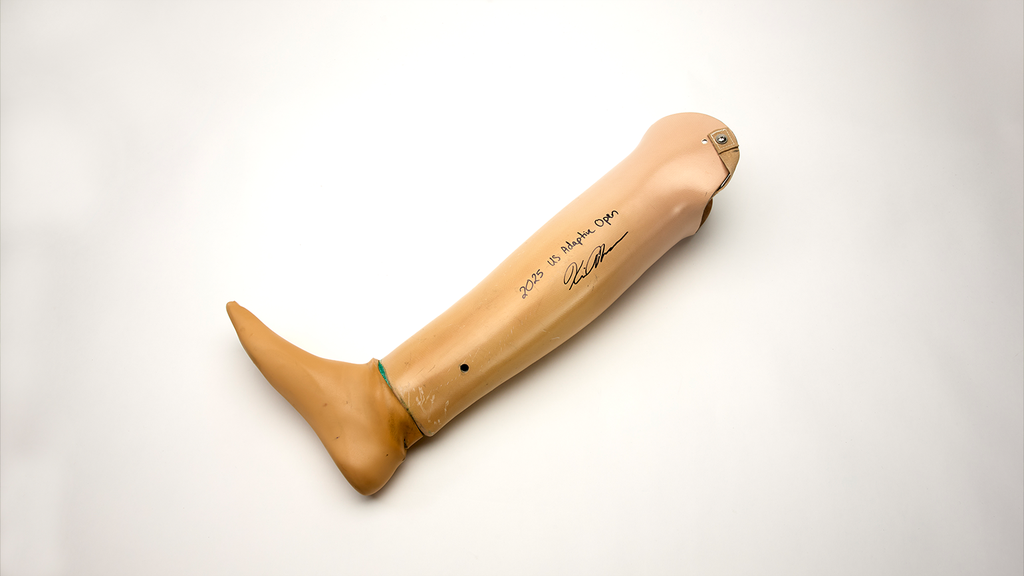
Kim Moore donated the prosthetic leg she used to capture her second women's U.S. Adaptive Open title last July. (USGA/Jonathan Kolbe)

Kim Moore donated the prosthetic leg she used to capture her second women's U.S. Adaptive Open title last July. (USGA/Jonathan Kolbe)

Prosthetic leg worn by Kim Moore, 2025 U.S. Adaptive Open

Kim Moore won her second U.S. Adaptive Open title in July at Woodmont Country Club’s South Course, in Rockville, Md. Moore, who was born without a right foot and a slight case of spina bifida, also won the inaugural Adaptive Open in 2022 at Pinehurst No. 6.

This year, Moore trailed by three strokes heading into the final round, but steady play saw the former head women’s golf coach at Western Michigan University overtake 19-year-old Cassie Sengul to win by three. To commemorate her win, Moore donated the prosthetic leg she wore during the championship. 

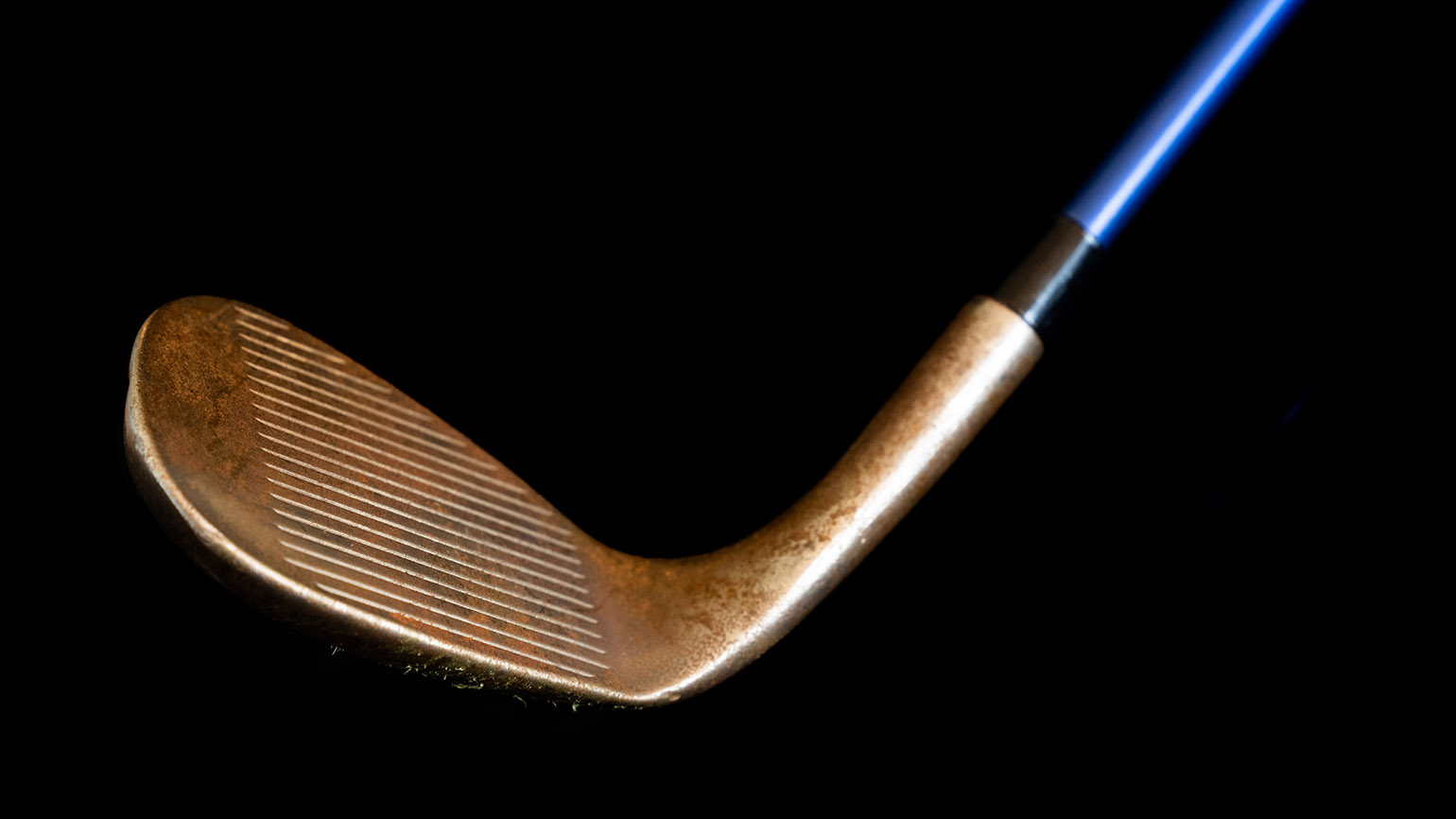
Bryson DeChambeau used this sand wedge to hit a miraculous 54-yard bunker shot to get up and down for par on the 72nd hole of the 2024 U.S. Open, which he won by a stroke over Rory McIlroy. (USGA/Darren Carroll)

Bryson DeChambeau used this sand wedge to hit a miraculous 54-yard bunker shot to get up and down for par on the 72nd hole of the 2024 U.S. Open, which he won by a stroke over Rory McIlroy. (USGA/Darren Carroll)

Sand wedge used by Bryson DeChambeau, 2024 U.S. Open

Bryson DeChambeau won his second U.S. Open title in 2024 at Pinehurst No.2, edging Rory McIlroy by one stroke. DeChambeau’s victory came on the 25th anniversary of fellow Southern Methodist University alum Payne Stewart’s win at the same course. Stewart would perish in a plane crash four months later.

The most memorable shot of the championship came on the 72nd hole. Facing a challenging 55-yard bunker shot, DeChambeau used this sand wedge to cozy his ball within 4 feet of the hole, setting up his winning par putt. He was the only player to get up and down from that front greenside bunker in the entire championship. DeChambeau called it “the shot of my life.”

DeChambeau confirmed that this club was also used in the viral video series when he made a hole in one over his house. The sand wedge is currently on display at the USGA Experience in Pinehurst, N.C. 

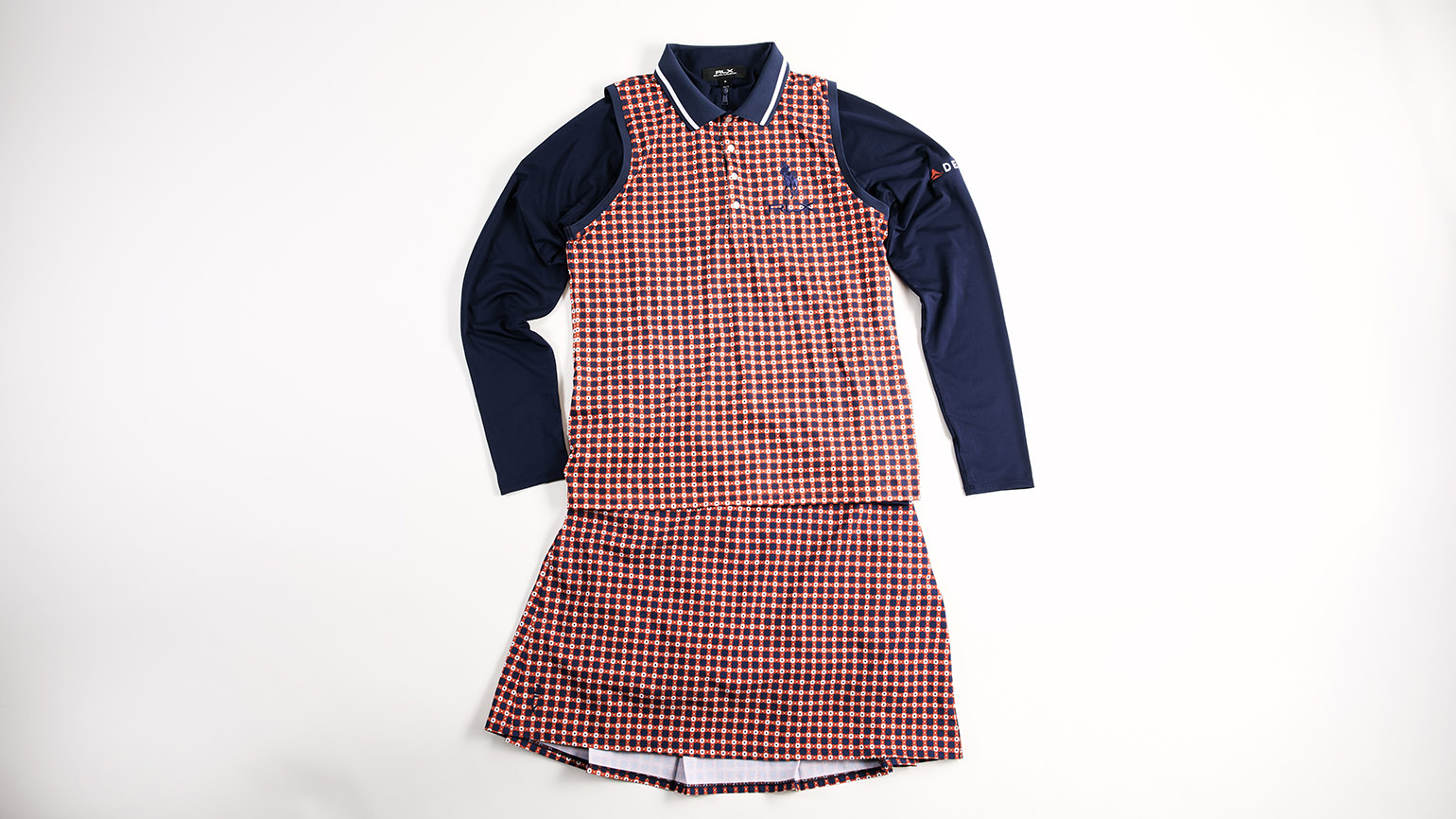
Megha Ganne wore this outfit during her semifinal win at the 125th U.S. Women's Amateur. She would win the championship the following day in the 36-hole final over Brooke Biermann. (USGA/Jonathan Kolbe)

Megha Ganne wore this outfit during her semifinal win at the 125th U.S. Women's Amateur. She would win the championship the following day in the 36-hole final over Brooke Biermann. (USGA/Jonathan Kolbe)

Outfit worn by Megha Ganne, 2025 U.S. Women’s Amateur

Megha Ganne was crowned the champion of the 125th U.S. Women’s Amateur this past August at Bandon Dunes Golf Resort in Oregon. Through the quarterfinals, Ganne defeated three top-20 players in the Women’s World Amateur Golf Ranking®.

Then, after falling 4 down through 11 holes against Australian Ella Scaysbrook in the semifinals, Ganne dug deep and rallied to win in 19 holes. Her tenacity took her through the 36-hole final match in which she never trailed, defeating 2025 Michigan State graduate Brooke Biermann, 4 and 3.

Ganne donated the outfit she wore during her semifinal comeback against the No. 63 seed.

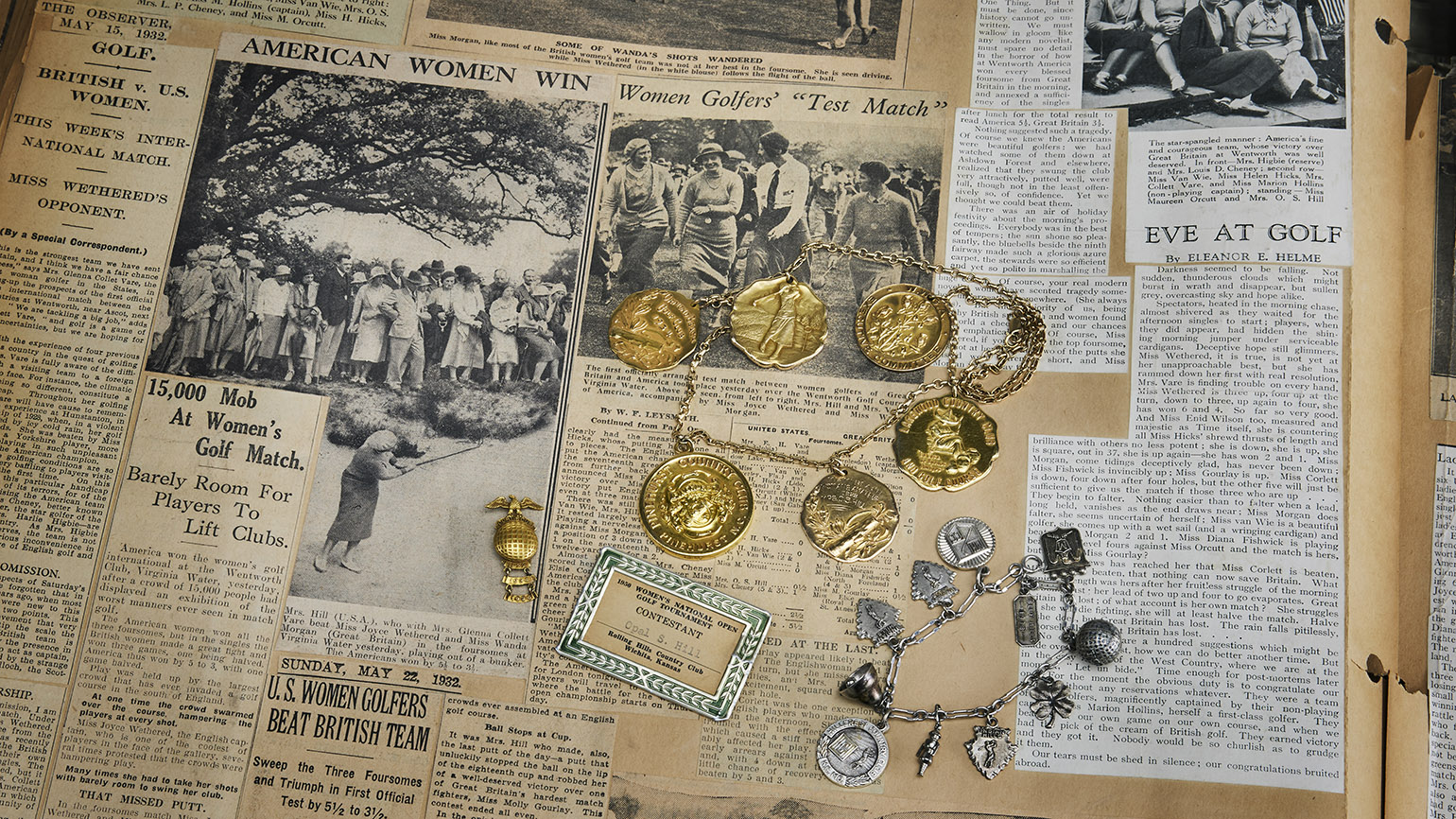
Memorabilia from LPGA founder Opal Hill was donated to the USGA Museum in 2025. (USGA/Jonathan Kolbe)

Memorabilia from LPGA founder Opal Hill was donated to the USGA Museum in 2025. (USGA/Jonathan Kolbe)

The Opal Hill Collection

Opal Hill began playing golf later in life, but that didn’t stop her from a successful career that culminated with her becoming one of the 13 founders of the LPGA. She won three Women’s Western Amateurs (1929, 1931, 1932) and two Women’s Western Opens (1935, 1936). In 1938, Hill became the third American woman to turn professional, at the age of 40.

Hill was meticulous in documenting her golf career. She transformed her champion’s medals into a necklace and compiled scrapbooks from 1930 to 1942. The scrapbook seen here documents her years playing on the first three USA Curtis Cup teams (1932, 1934, 1936). She was also part of the 1930 international competition that was the precursor to the Curtis Cup Match. Hill saved newspaper clippings, tickets, photos and menus from steam liners, all of which helped to tell the origins of the Curtis Cup. 

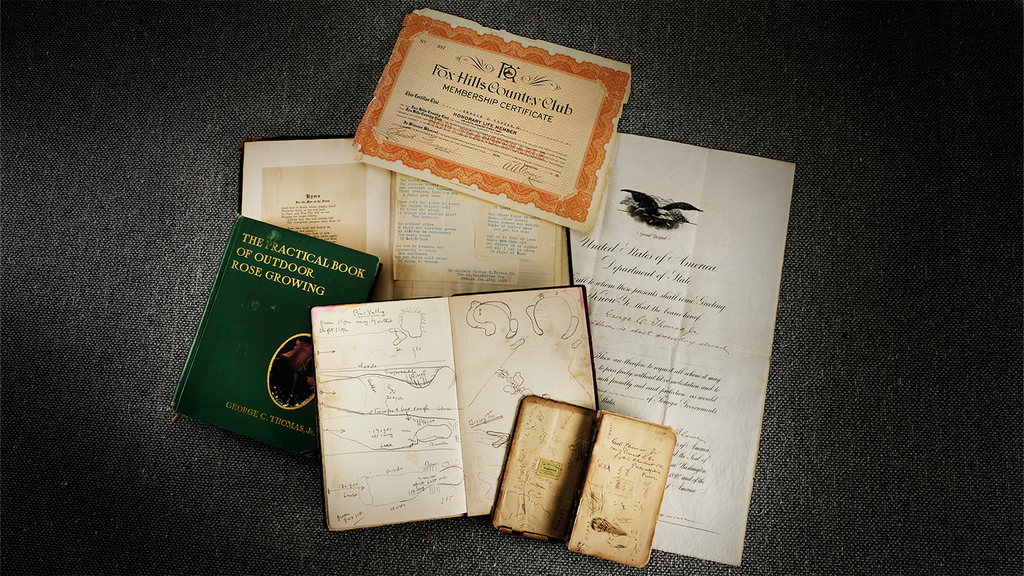
The USGA Golf Museum and Library received a collection of items from legendary architect George Thomas Jr. (USGA/Jonathan Kolbe)

The USGA Golf Museum and Library received a collection of items from legendary architect George Thomas Jr. (USGA/Jonathan Kolbe)

George C. Thomas Jr. Collection

Captain George C. Thomas, Jr. was a man of many talents, passions and accomplishments. In addition to being a renowned golf course architect, he was a yachtsman, dog breeder, champion rose cultivator, author and a U.S. Army officer during World War I. Notably, Thomas designed a trio of golf courses in Southern California: The  Los Angeles Country Club (1921), Bel Air C.C. (1926) and Riviera C.C. (1927).

His great-granddaughter, Meredee Wall, donated his collection to the USGA Golf Museum & Library. The items reflect all aspects of his life, including family photos, his first passport, photographs, and various sketches and designs. When asked why she chose to donate her great-grandfather's work, Wall stated, “I know how important the work of the USGA is in collecting and sharing golf. The Captain’s work does not belong in filing cabinets; this is right where he belongs.”

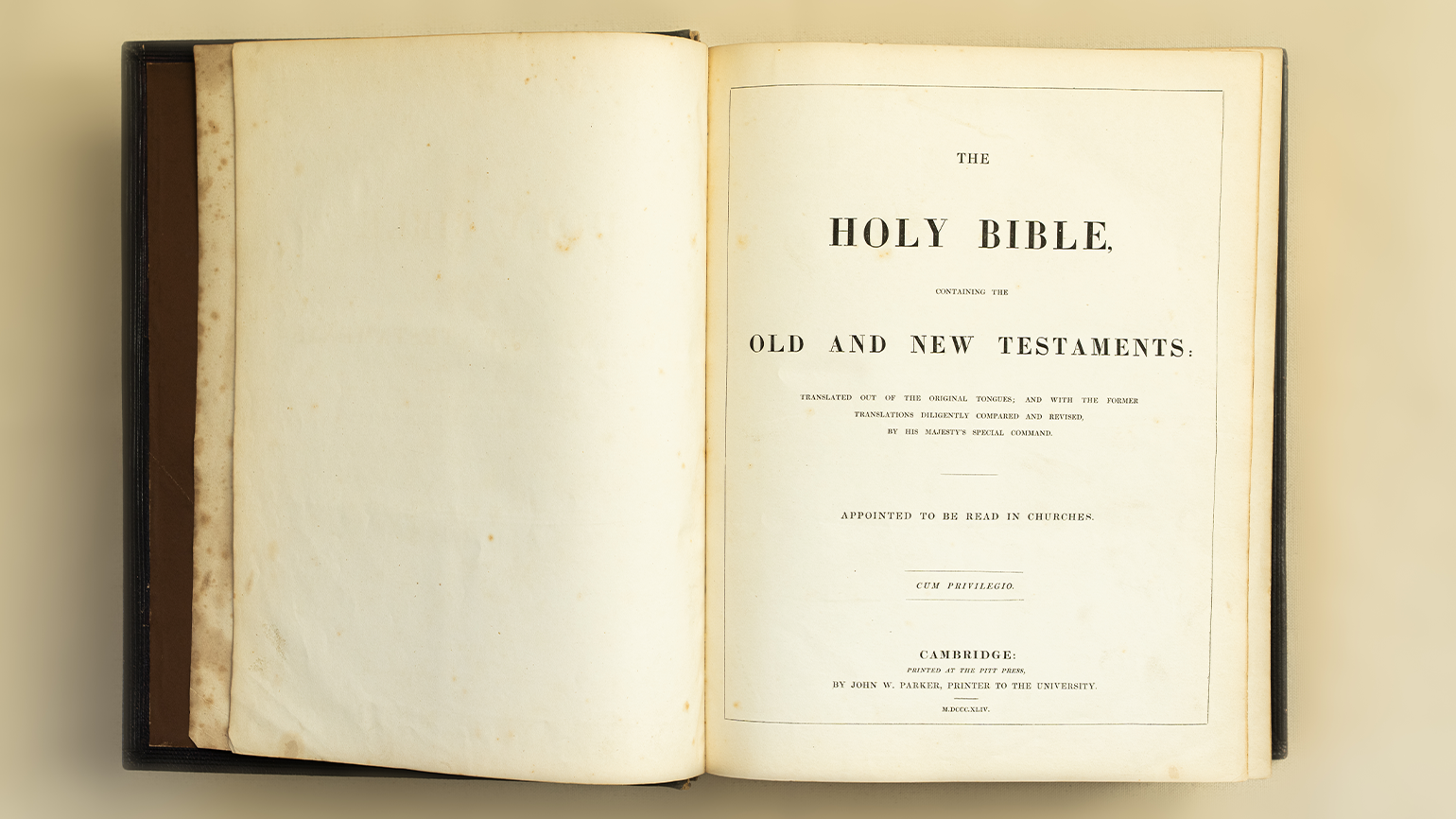
The bible used by Old Tom Morris was donated to the USGA Museum in 2025. (USGA/Jonathan Kolbe)

The bible used by Old Tom Morris was donated to the USGA Museum in 2025. (USGA/Jonathan Kolbe)

Bible that belonged to Tom Morris Sr.

“Old Tom” Morris was born and raised in St. Andrews, Scotland, where he was surrounded by golf. He began playing the game at a young age and spent over a decade making golf balls under Allan Robertson. Morris went on to win four Open Championships (1861, 1862, 1864 and 1867), a feat his son Tom Morris Jr. also achieved. Old Tom was inducted into the World Golf Hall of Fame in 1976 and is remembered as one of golf’s founding fathers.

This Bible has been in the Morris family since 1844. It was passed down through the family of Elizabeth Morris Hunter, Tom Morris Sr.’s daughter. The Bible is currently on display in Old Tom’s locker at the World Golf Hall of Fame in Pinehurst, N.C.

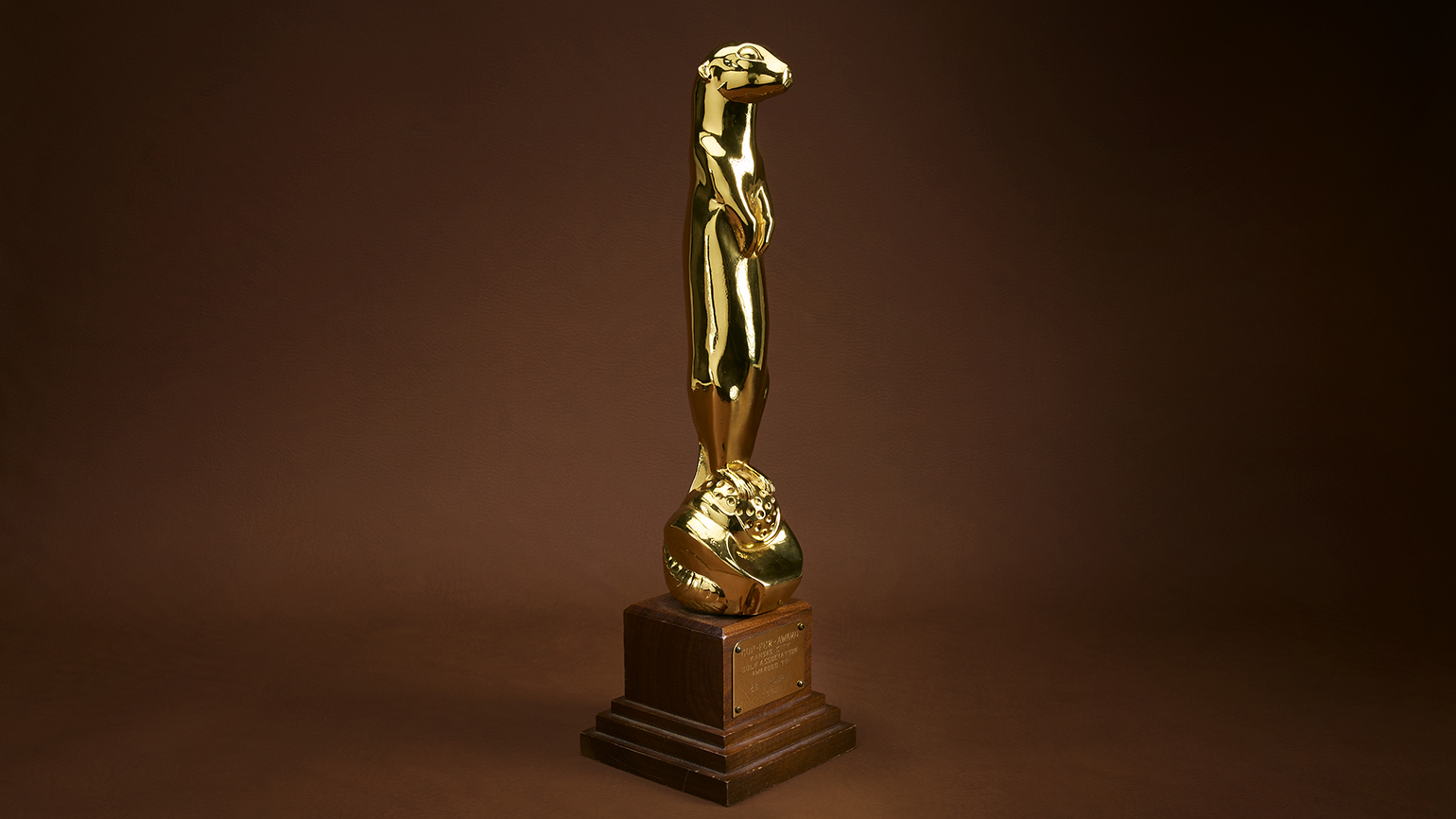
The Gof-Fer Award won by Ben Hogan in 1948. (USGA/Jonathan Kolbe)

The Gof-Fer Award won by Ben Hogan in 1948. (USGA/Jonathan Kolbe)

“Gof-fer" Trophy won by Ben Hogan

The Kansas City Golf Association (KCGA) hosted its first “Gof-fer” award dinner on Oct. 9, 1948, to honor the top golfers of the year. Attendees that year included Byron Nelson, Frank Stranahan and Chick Evans. The KCGA hoped that the “Gof-fer” award, which would be distributed annually to the best professional and amateur in the game, would become the “Oscar” of the golf world.

Ben Hogan was awarded the 1948 “Gof-fer” for the best professional, and Stranahan received it in the amateur category. That year, Hogan won his first U.S. Open and his second PGA Championship. Stranahan won the British Amateur, Canadian Amateur and Mexican Amateur. The trophy was donated by Hogan’s great-niece, Lisa Scott.

Elizabeth Beeck is the exhibitions curator for the USGA Golf Museum and World Golf Hall of Fame. Email her at ebeeck@usga.org.